CRM & Email
Gmail can rank your Black Friday emails. Send to fewer people.
Gmail can sort the Promotions tab by relevance, favouring brands people engage with. Why the engaged list wins on Black Friday, and the plan for the week.
 Tom GuerreauCo-founder, CEO4 min read
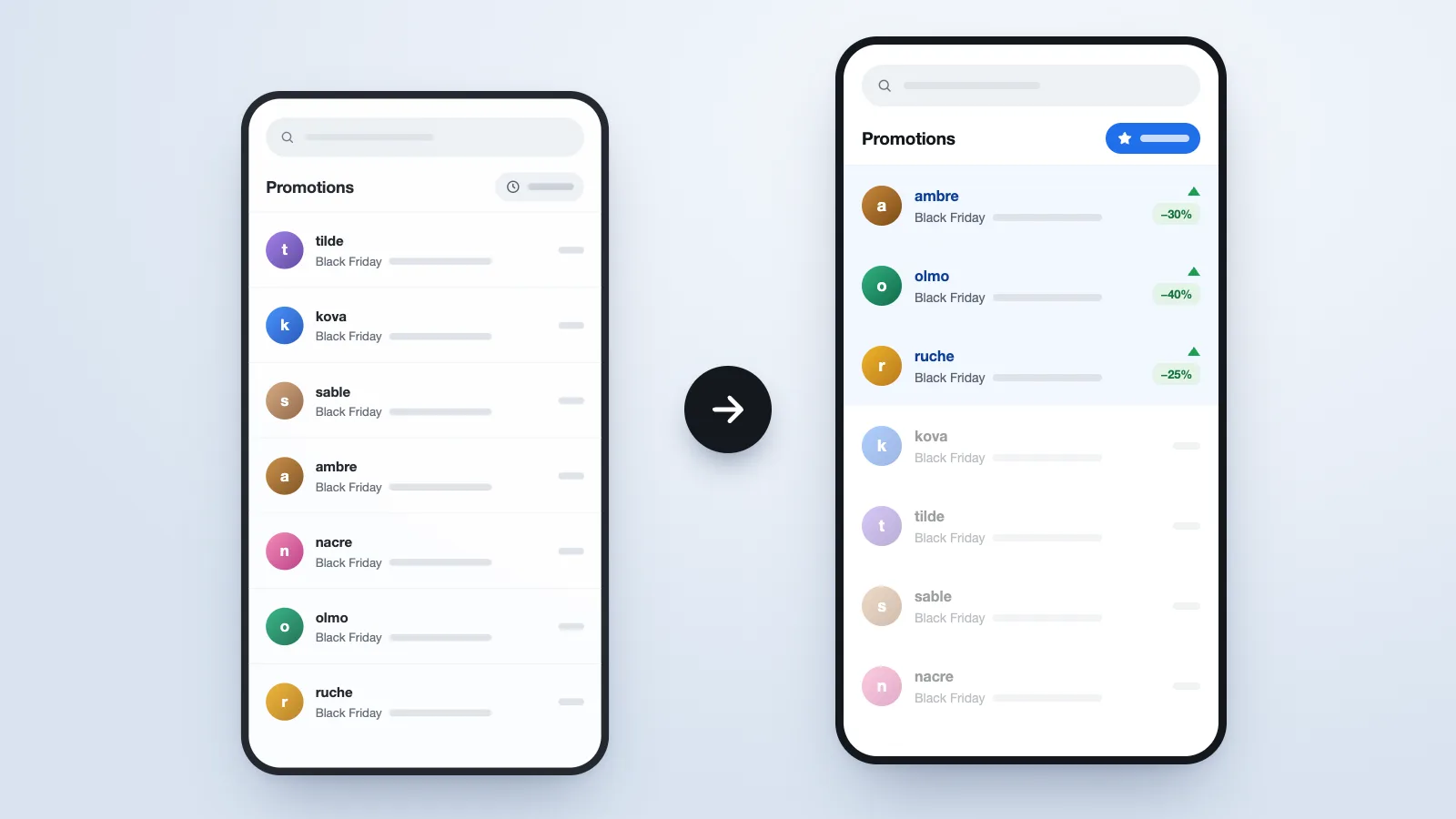
Black Friday week has one email reflex: everyone on the list, every day, until Monday. Gmail has quietly made that reflex more expensive. Since its announcement of September 2025, the Gmail app can sort the Promotions tab by “most relevant”, which favours the senders and brands each person interacts with most. For every reader on that sort, the week the tab is fullest is the week the brands they open and click rise to the top of it. That is an opportunity, and it goes to whoever picks the right people to send to.
What Gmail changed in the Promotions tab
Three things are worth knowing before the big send.
- A relevance sort. On the app, for personal Google accounts, the Promotions tab can be ordered by “most relevant” instead of “most recent”. Google says it favours the brands each reader interacts with most. It has not published the recipe, and nobody outside Google has it either, whatever the webinar says.
- Nudges. Cards at the top of the tab feature promotions Gmail judges time-sensitive or particularly relevant. A Black Friday offer with an end date is the kind that qualifies, though Gmail makes the call.
- Stricter delivery. Google’s sender guidelines FAQ says that from November 2025 Gmail ramped up enforcement: mail that misses the sender requirements now meets temporary and permanent rejections. Its sender guidelines ask senders to keep their spam rate below 0.1% and never to reach 0.3%.
Put together, the send list now decides both where a brand sits in the tab and whether its mail gets delivered at all.
Why the whole list is the wrong audience this week
The people who never engage do not read your Black Friday emails. They do find the spam button, and complaints tend to come from that dormant end of the list: people who no longer remember signing up, receiving a daily email in the week every brand sends one.
So the maths of the blast has changed. The extra revenue from the dormant segment is small, while the cost lands on the whole programme: complaints push your spam rate toward Google’s line, and a sender people ignore is a poor candidate for the top of a tab sorted by relevance. Sending to fewer people is how the email that matters gets seen.
Open rate is the wrong ruler for this
Building an engaged segment on opens is tempting. For readers who have it switched on, Apple’s Mail Privacy Protection loads remote content, tracking pixel included, whether or not anyone reads the message. Apple’s proxy opens everything and buys nothing, so an open-based segment is padded with readers who are not there.
Define engagement on what a machine cannot fake: a click, a site visit, an order. Ninety days is a sensible window for most retail lists, longer if you sell something people buy twice a year.
The plan for this week
- Cut the list into three tiers. Engaged: clicked, visited or bought in the last 90 days. Lapsing: the same between 90 and 180 days. Dormant: everyone else.
- Plan the sends by tier. The engaged tier gets the full sequence. The lapsing tier gets the launch and the last day. For the dormant tier, send your best offer to a slice and hold out the rest, then compare revenue per recipient and complaints: the result tells you whether that tier earns a second email.
- Mark up the offer. Google’s Promotions annotations let an email carry a deal badge, a discount code and an end date in the tab itself, when Gmail chooses to show them. Google’s best practices say to show a code only if it appears in the email. Ten minutes of markup, which is less time than the subject-line debate will take.
- Watch the spam rate daily. Postmaster Tools shows it per domain. If it climbs toward 0.1%, pause the lapsing tier before it costs you the engaged one. And keep one-click unsubscribe visible: an easy exit is cheaper than a complaint.
- Judge it on revenue per recipient. Total revenue always rises with volume. Revenue per recipient by tier shows what each tier earned, and where the next send is worth making. Our break-even ROAS post does the same job for the paid side.
The brands people want to hear from win the tab
A tab sorted by relevance is a gift to any brand with an engaged core, and Black Friday is when it pays most. Taking it means segments built on clicks and orders and a spam rate watched like a budget, then the same discipline in January when the dormant tier needs winning back. That is the work our CRM and email team does all year. Black Friday is just the one week our own unsubscribe links get this much attention.